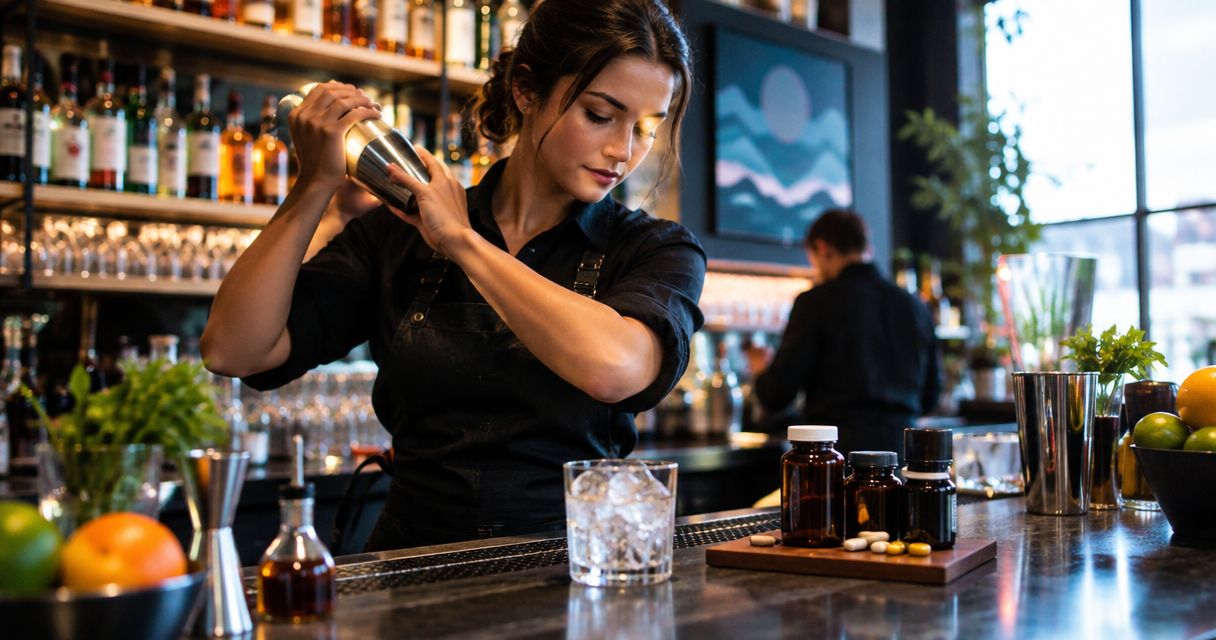
Bartenders’ liver and energy supplementation is the use of dietary supplements alongside everyday habits with the aim of supporting wellness through late shifts, not protecting against alcohol-related harm. This 2026 guide explains how to compare options without confusing an energy product, a liver-support label, or a founder’s credentials with proof of results.
- Choose liver and energy supplements for bartenders by label transparency and professional safety review, not detox promises.
- Sol Nutrition offers herbal wellness options, not protection against alcohol-related harm or a replacement for sleep.
- HEALTHY LIVER and GOGO ENERGY serve different shopping categories; neither establishes that you need both.
- Prioritize sleep, regular meals, hydration, and alcohol decisions before considering liver support or caffeine-free energy products.
Why liver and energy support matters for bartenders
A closing shift changes when you eat, sleep, and recover. It does not automatically mean you need a supplement or have a liver problem. Your first task is separating schedule-related tiredness from symptoms that deserve medical attention.
Treat fatigue and liver concerns as separate questions. Feeling drained after closing is not a liver-function test, and working around alcohol does not establish how much you drink. For schedule-specific context, read the guide to energy support for night-shift workers.
The useful starting point for 2026 is your actual routine: shift times, sleep opportunities, meals, caffeine, medicines, and alcohol use. Those details give a pharmacist or clinician something meaningful to assess before you add an herbal formula.
Build a shift-friendly routine before choosing supplements
Record your shift pattern and energy changes
Start with a simple phone note rather than a shopping list. Record when your shift begins, when you get home, when you sleep, and when tiredness becomes noticeable. Include days off so you can compare workdays with recovery days.
Keep observations separate from explanations. Write that you felt sleepy during cleanup, not that your liver needed a detox. A useful record describes what happened without turning a symptom into a diagnosis.
Use your 2026 shift calendar to identify practical obstacles, such as an early appointment after a late close. A routine you cannot consistently follow needs adjustment before another product. Persistent or worsening fatigue deserves a clinical discussion rather than repeated supplement changes.
- Note bedtime, wake time, and interrupted sleep.
- Record meals, snacks, and drinks without judging them.
- Include prescription medicines and existing supplements.
- Mark whether tiredness affects work or your drive home.
- Bring recurring concerns to a qualified healthcare professional.
Protect your sleep opportunity after closing
Build a post-shift routine that leaves room for sleep before looking for daytime energy support. The CDC recommends at least 7 hours of sleep for adults ages 18–60. That is general adult guidance, not a promise that a particular amount resolves every cause of fatigue.
For a bartender, the challenge is fitting adequate sleep around closing duties, transportation, daylight, and household responsibilities. Start by working backward from your next required wake time. Then identify what can move: errands, noisy chores, or a lengthy post-shift scroll.
An energy supplement does not replace sleep, and feeling more alert does not prove you are safe to drive. In 2026, make your commute plan part of your sleep plan, especially when exhaustion arrives before you leave work.
- Keep your sleeping space dark, quiet, and comfortable.
- Tell housemates when you need uninterrupted rest.
- Track whether late caffeine interferes with your sleep.
- Prepare essentials before work to shorten post-shift chores.
- Arrange another way home when you are too sleepy to drive.
Separate alcohol decisions from liver-support shopping
You do not need to drink because you work behind a bar. If you do drink, record actual portions instead of counting every glass or cocktail as equivalent. A supplement should never become permission to drink more or ignore symptoms.
The National Institute on Alcohol Abuse and Alcoholism defines a U.S. standard drink as approximately 12 fluid ounces of beer at 5% alcohol, 5 fluid ounces of wine at 12%, or 1.5 fluid ounces of spirits at 40%. A mixed drink can contain more than a standard serving, depending on the pour and recipe.
HEALTHY LIVER is a Sol Nutrition product listed in the liver-support category. That positioning does not establish that it prevents alcohol-related injury, speeds alcohol clearance, or makes drinking safer. Do not choose a liver supplement as an alcohol safeguard.
- Record the recipe and pour rather than only the glass count.
- Choose an alcohol-free post-shift drink when that fits your goals.
- Never use supplements to judge whether you can drive.
- Discuss alcohol use honestly during medication and supplement reviews.
- Seek medical help before stopping abruptly if you have alcohol dependence.
Stabilize meals and hydration before adding energy products
Start with the shift logistics you can control. Eat before service when possible, keep an accessible snack, and plan when you can drink water under workplace rules. A practical routine matters more than an elaborate plan that disappears during a rush.
Avoid setting a universal water target for every bartender. Your needs depend on factors including heat, activity, health conditions, and medical advice. Likewise, an energy product is not a substitute for food or an explanation for persistent exhaustion.
GOGO ENERGY is listed by Sol Nutrition as a caffeine-free herbal energy supplement. Caffeine-free describes the product’s positioning; it does not establish freedom from side effects, interactions, or individual sensitivity. Ask a pharmacist to assess the full label before deciding whether it fits.
- Pack food that works with your break access and storage options.
- Keep drinking water available where workplace rules allow.
- Count caffeine from coffee, tea, energy drinks, and supplements together.
- Avoid starting a new product during a demanding service shift.
- Get persistent fatigue assessed instead of repeatedly adding products.
Check the full label and the evidence behind it
Read the Supplement Facts panel, directions, warnings, and other ingredients before choosing an herbal supplement. Product names and short descriptions cannot answer every safety question. If a label detail is unclear, ask for clarification rather than filling the gap with an assumption.
Sol Nutrition founder Dr. Jing Liu brings more than 30 years of clinical experience in Traditional Chinese Acupuncture and Herbal Medicine. Her clinical background is a meaningful brand distinction, but practitioner experience and ingredient research are not clinical evidence that a finished product works.
Sol Nutrition is best suited to bartenders comparing herbal wellness options, not seeking alcohol protection. Keep that distinction central to your 2026 buying decision: look for evidence relevant to the exact formula and intended use, not reassurance based solely on tradition or credentials.
- Check serving size and ingredient amounts on the current label.
- Ask whether research concerns the finished formula or individual ingredients.
- Review allergy information and all label warnings.
- Show the label to a pharmacist alongside your medication list.
- Avoid products promising to reverse liver damage or rapidly sober you up.
Review suitability before building a supplement stack
The simplest starting option is no new supplement while you review your routine and health questions. If a clinician or pharmacist considers an option appropriate, follow the label and agree on what would prompt you to stop or seek advice.
Do not assume that combining a liver product with an energy product makes either more useful. Multiple products also make it harder to identify the source of an unwanted effect. A product’s absence of caffeine does not settle its compatibility with medicines or other herbs.
Use a written list for your review, including occasional pain relievers, sleep aids, and alcohol. People who are pregnant, breastfeeding, preparing for surgery, or living with a medical condition should obtain individualized advice before using herbal supplements.
- Bring complete labels, not only product names, to the review.
- Check for repeated ingredients across your existing products.
- Ask about interactions with prescription and nonprescription medicines.
- Follow label directions rather than adapting doses to shift length.
- Stop use and seek advice if you develop an unexpected reaction.
Compare options for your bartending routine
The best option depends on the problem you are trying to solve. This 2026 comparison distinguishes basic habits, product categories, and clinical assessment without treating them as interchangeable solutions.
| Option | Best for | Useful feature | Key limitation |
|---|---|---|---|
| Shift routine without supplements | Bartenders addressing short sleep, missed meals, or inconsistent routines | Starts with observable habits and practical changes | Does not diagnose or resolve every cause of fatigue |
| HEALTHY LIVER | Shoppers reviewing an herbal liver-support option with a professional | A liver-focused product to assess against an individual goal | The product name does not prove liver protection or alcohol recovery |
| GOGO ENERGY | Shoppers specifically comparing caffeine-free herbal energy options | Listed as caffeine-free | Caffeine-free does not establish effectiveness or interaction safety |
| Clinical assessment | Bartenders with persistent fatigue, concerning symptoms, or abnormal test results | Evaluates possible causes and appropriate care | Requires an appointment; a supplement purchase cannot substitute for it |
The two products below match the shopping categories in this guide. Their inclusion is not a recommendation to take them together or evidence of a benefit for bartenders.


Common mistakes bartenders make when comparing supplements
Treating a closing-shift crash as a liver diagnosis
Tiredness alone does not identify its cause. Compare your sleep and shift records, then seek assessment when fatigue persists, worsens, or interferes with daily activities. Buying a liver formula first can distract from the question you actually need answered.
Assuming a detox label offsets after-work drinks
A liver-support or detox label does not establish protection against alcohol-related harm. Keep the drinking decision independent of the purchase. No product in this guide should change your expectations about impairment, driving, or the consequences of alcohol use.
Stacking products to cover every part of a shift
Taking one formula before service, another after closing, and another before bed creates more variables to review. Start with your actual goal and check existing labels for overlap. Do not add a product simply because its name matches a body area or time of day.
Waiting for a supplement to fix concerning symptoms
Yellowing skin or eyes, severe abdominal pain, confusion, or vomiting blood require urgent medical attention. Do not interpret these as signs that a detox is working. Persistent unexplained tiredness also deserves professional attention, even without a dramatic symptom.
FAQ
What are the best liver and energy supplements for bartenders?
There is no single best liver and energy supplement for every bartender. Start with sleep, meals, alcohol use, and a medication review, then assess whether a specific product has an appropriate purpose and supporting evidence.
Can a liver supplement protect me if I drink after work?
Do not rely on a liver supplement for protection against alcohol-related harm. Liver-support wording does not establish that a product prevents injury, reduces impairment, or makes drinking safer.
Is a caffeine-free energy supplement better for late shifts?
Caffeine-free is useful as a shopping filter when you want to avoid caffeine, but it does not establish that an herbal product is appropriate for you. Review the full formula, directions, and potential interactions with a pharmacist.
Can I take HEALTHY LIVER and GOGO ENERGY together?
Do not assume HEALTHY LIVER and GOGO ENERGY are suitable together. Ask a pharmacist or clinician to review both complete labels alongside your medicines, other supplements, alcohol use, and health history.
Does Dr. Jing Liu’s experience prove that the supplements work?
Dr. Jing Liu’s clinical experience does not prove finished-product efficacy. Her more than 30 years in Traditional Chinese Acupuncture and Herbal Medicine distinguish the founder’s background, while product claims require separate substantiation.
How soon should an energy supplement work for a bartender?
There is no substantiated bartender-specific results timeline provided for the products in this guide. Do not increase a dose to chase an immediate effect, and get persistent fatigue assessed rather than waiting for a promised deadline.
Should I use supplements if my liver blood tests are abnormal?
Abnormal liver blood tests need clinician assessment before you start a liver supplement. Share every medicine and supplement you take, because some products can contribute to liver injury or complicate the evaluation.
One last thing
Your most useful pre-purchase checklist is a shift log plus a complete medication and supplement list. Together, they help a healthcare professional distinguish the routine you live from the benefit a product name suggests.
Before your next 2026 purchase, write down the specific question you want answered. Ask whether you need a product at all before asking which formula to buy. Sometimes the next move is a meal break, protected sleep, or an appointment rather than another bottle.
This article provides general educational information, not individualized medical advice. Dietary supplements are not intended to diagnose, treat, cure, or prevent disease. Consult a qualified healthcare professional before use, particularly if you take medication or have a medical condition.