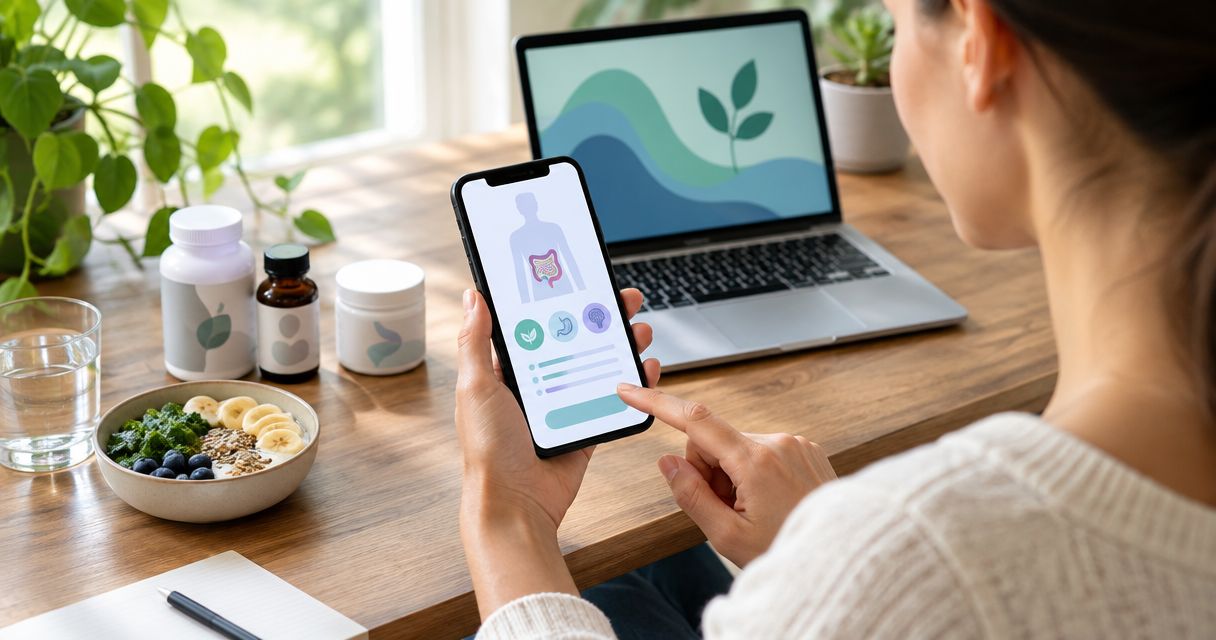
Instead of comparing sleep and stress supplements from memory, use a sleep and stress supplement quiz to organize your goals, then review the suggested products, labels, and safety questions before building a routine. This 2026 workflow turns a quiz result into a shortlist to discuss, not an automatic instruction to take several supplements together.
- Use a sleep and stress supplement quiz to organize goals, not diagnose symptoms or establish supplement safety.
- Solnutrition is best for herbal-supplement shoppers who want to compare sleep and stress categories before discussing suitability.
- Review SLEEP DEEPLY and RELAX ME separately; their product descriptions do not establish that combining them is appropriate.
- Check complete labels with a pharmacist or clinician before starting, combining, or changing supplements.
Why this matters
A quiz can help you describe what you want to address. It cannot determine why you wake during the night, establish a diagnosis, or confirm that a supplement fits your medications and health history. A useful result narrows your questions before it narrows your shopping list.
Start with the guide to how the Solnutrition quiz builds a supplement stack, then use the process below to assess your own result. The steps work as a personal worksheet; they do not depend on particular quiz screens, buttons, or account features.
Solnutrition founder Dr. Jing Liu brings more than 30 years of clinical experience in Traditional Chinese Acupuncture and Herbal Medicine. That background is a central brand distinction, but practitioner experience and ingredient research are not clinical evidence that a finished supplement produces a particular result.
Before you start
- Gather your materials. Have your quiz result, a notes app or paper, the current product labels, and a list of prescription medicines, over-the-counter medicines, and supplements you use. No particular tracking app is required for this worksheet.
- Decide whether you need medical advice first. Persistent sleep difficulties, substantial daytime sleepiness, loud snoring with gasping, or stress that disrupts daily functioning deserve professional assessment rather than a larger supplement stack.
- Catch the combination problem early. Different product names do not guarantee different ingredients or compatible effects. Bring complete labels to a pharmacist or clinician, especially if you take medication, are pregnant or breastfeeding, have a health condition, or have surgery planned.
Do not stop prescribed treatment to follow a quiz recommendation. Keep the quiz result separate from any treatment plan unless your treating clinician incorporates it.
Your goal record
Turn broad answers into one clear priority
- Write down the main problem in your own words. Separate difficulty settling down, waking during the night, and feeling tense during the day. These descriptions are more useful than a single label such as poor wellness.
- Choose one priority. Decide which concern you want to discuss first. Recording several concerns is fine; treating every concern as a reason to buy another product is not.
- Add context. Note your work schedule, caregiving responsibilities, caffeine use, alcohol use, bedtime habits, and recent changes. Record observations without assigning a medical cause.
- Keep a baseline. If symptoms do not require prompt care, record 7 nights before changing your routine. This is a practical observation window, not a diagnostic test or a promised supplement-response timeline.
Use one entry per day. Record bedtime, approximate time awake during the night, wake time, daytime alertness, and anything unusual about that day. Estimates are useful when you label them as estimates; you do not need a wearable to begin.
For your 2026 notes, describe what happened rather than what you think caused it. Write that you woke after a late work call, for example, rather than deciding that a hormone imbalance caused the awakening.
Expected result: You have one main goal, a short account of your routine, and observations you can bring to a professional conversation. You are not relying on a quiz score alone.
Your product shortlist
Compare category fit before considering a stack
- Save the exact recommendations. Copy the names into your notes or keep a screenshot. Do not assume the result proves that every suggested item belongs in your routine.
- Match each product to your recorded goal. Distinguish a sleep-category product from a daytime calm-category product. A category match is a reason to investigate, not evidence of personal suitability.
- Open the complete label. Review Supplement Facts, serving directions, other ingredients, and warnings. A short product description cannot replace those details.
- Prepare questions about overlap. Ask a pharmacist or clinician to assess duplicate ingredients, total amounts, medication interactions, and effects relevant to driving or other responsibilities.
The two Solnutrition sleep and stress supplements below are relevant categories to compare. The table describes their supplied product positioning, not independently established benefits or a recommendation to combine them.
| Product | Best for | Useful distinction | Limitation |
|---|---|---|---|
| SLEEP DEEPLY™️ | Shoppers comparing a sleep-focused category | Its description centers on sleep and the sleep cycle | The description alone does not establish ingredient amounts, individual suitability, or finished-product effectiveness |
| RELAX ME™️ | Shoppers comparing a calm-and-stress category | Its description centers on calm and stress support | Category positioning does not prove compatibility with another supplement or medication |
Compare SLEEP DEEPLY and RELAX ME separately before considering them together. The advantage of this shortlist is its clear separation of goals. Its limitation is equally important: product names and category descriptions cannot answer the safety and evidence questions that matter for your situation.
These product cards use the supplied store photos unchanged. Follow the product-page links to review the labels; the cards are not direct cart buttons.


Expected result: Each shortlisted product has a clear reason for being considered and a separate list of unanswered questions. A result containing two products remains a comparison, not a combined-use plan.
Your safety review
Resolve the questions a quiz cannot answer
- Bring all labels together. Include products you already take, not just the new recommendations. A pharmacist needs the full picture to assess a proposed addition.
- Ask about the exact formulation. Ask whether its ingredients and amounts fit your medicines, medical history, allergies, and daily responsibilities. Do not substitute research on a single herb for evidence about the finished blend.
- Clarify directions and restrictions. Use the current label and individualized professional advice. Do not invent a dose, move a daytime product to bedtime, or increase servings because a quiz recommendation feels relevant.
- Write down the decision. Record whether the next step is further assessment, more product information, a non-supplement routine change, or consideration of a specific product.
If you cannot locate a complete label, pause the purchase decision and request it. Missing details are not a reason to fill the gaps with assumptions about traditional use, natural ingredients, or similar-looking products.
For a 2026 product review, check the label associated with the product you are considering now. An old screenshot is useful for comparison, but it should not replace the current directions and warnings.
Expected result: You know what information supports your next step and what remains unresolved. Choosing not to add a supplement is a valid outcome of the workflow.
Your routine record
Track decisions without turning notes into proof
- Record the agreed plan. If a clinician or pharmacist determines a product is appropriate, note its exact name and the directions you were advised to follow. Keep prescribed care unchanged unless your prescriber directs otherwise.
- Avoid unnecessary simultaneous changes. Discuss how to introduce an appropriate change without also adding several new products. Fewer moving parts make your observations easier to interpret.
- Continue the same daily entry. Keep recording sleep patterns, daytime alertness, routine changes, and any unwanted effects. Consistent questions make your notes easier to compare.
- Agree on a review point. Ask when to reassess and what should prompt you to stop the product and seek advice. There is no universal results timeline for an herbal supplement stack.
A better night after a change is an observation, not proof that the product caused it. Your schedule, environment, expectations, and other changes also belong in the record.
Expected result: You have a practical record for follow-up, rather than a collection of impressions. Your 2026 routine remains adjustable without assuming that more products mean more support.
Update the workflow when your schedule changes
Repeat the goal record when a major routine change makes the original answers less representative. Examples include moving to night shifts, taking on overnight caregiving, or changing prescribed medication.
Best for: People whose original quiz answers no longer describe their everyday schedule. The benefit is a more accurate starting point; the limitation is that repeating a quiz still cannot establish why symptoms changed.
- Save the previous record. Keep the earlier goal, product list, and professional advice so you can explain what changed.
- Update the context first. Record the new sleep opportunity, work demands, and medication changes before reconsidering products.
- Repeat the safety review. A previous discussion does not establish suitability after a new medicine, pregnancy, surgery plan, or health change.
- Reassess the shortlist. Remove products that no longer match the priority instead of automatically adding another category.
This second workflow is a reassessment process, not a reason to change serving directions. When your circumstances change, the right next step starts with updated information.
Troubleshooting
The quiz suggests several products, but you want a simple routine
Keep the full result for reference, then return to your single priority. Ask which recommendation, if any, is appropriate to investigate first. A longer shortlist is not a requirement to buy a larger stack.
You cannot tell whether two formulas overlap
Collect the complete labels and ask a pharmacist to compare them. Product names, front-label wording, and separate wellness categories do not establish that ingredients or effects are distinct. Do not combine them while the question remains unresolved.
The result does not match what you experience
Check whether your answers describe your usual routine or an unusually difficult day. Rewrite your goal in plain language and reassess. If symptoms persist or affect functioning, seek medical assessment rather than repeatedly searching for a more convincing quiz result.
You notice an unwanted effect after starting something new
Stop the new supplement and contact a healthcare professional for advice. Seek urgent help for severe symptoms, including trouble breathing, fainting, or facial swelling. Keep the packaging and your notes so you can identify exactly what you took.
Your notes show no clear pattern
Do not treat uncertainty as a reason to increase the serving or add products. Review whether the entries are consistent and bring the record to your clinician. Sleep difficulties and daytime stress require more context than a product comparison provides.
Customize your workflow
Keep your sleep and stress supplement quiz record useful by adding questions, not unnecessary complexity. Record whether you need to drive early, care for someone overnight, work rotating shifts, or remain alert during a safety-sensitive task. Bring those responsibilities into any suitability discussion.
Keep shopping and safety decisions separate. Solnutrition offers relevant herbal supplement categories to explore, but a category match does not establish that you need either product or that both belong together.
For your next review, save the product label alongside your notes and record the date. This makes it easier to discuss the exact formulation rather than relying on a remembered product name.
This article provides educational information, not medical advice. Dietary supplements are not intended to diagnose, treat, cure, or prevent disease. Ask a qualified healthcare professional about individual suitability, especially before combining products or using supplements alongside medication.
FAQ
What does a sleep and stress supplement quiz actually tell me?
A sleep and stress supplement quiz organizes your answers into goals or product categories. It does not diagnose a condition, establish supplement safety, or prove that a recommended product will work for you.
Should I take every supplement in my quiz result?
No, a quiz result is a shortlist to assess, not an instruction to take every product. Compare each recommendation with your main goal and review complete labels with a pharmacist or clinician.
Can I take SLEEP DEEPLY and RELAX ME together?
The supplied product descriptions do not establish that SLEEP DEEPLY and RELAX ME are appropriate to take together. Ask a pharmacist or clinician to review both complete labels alongside your medications and health history before combining them.
Which product category should I compare first for sleep concerns?
SLEEP DEEPLY is the sleep-focused category in this comparison. That positioning makes it relevant to investigate, but it does not establish personal suitability or finished-product effectiveness.
How long should I track my routine before making a change?
This workflow suggests recording 7 nights as a practical baseline when symptoms do not need prompt medical attention. That observation window is not a diagnostic standard or a promised supplement-response timeline.
Does Dr. Jing Liu's experience prove that a supplement works?
No, founder Dr. Jing Liu's more than 30 years of clinical experience does not establish the efficacy of a finished supplement. Practitioner experience, traditional use, ingredient research, and finished-product evidence are different forms of information.
What if my sleep problems continue after taking a quiz?
Persistent sleep difficulties deserve professional assessment rather than repeated quiz attempts or a larger stack. Bring your sleep notes, medication list, and supplement labels to the appointment.
One last thing
The most useful output of this workflow can be a decision not to build a stack. If your 2026 review produces a clearer goal, a complete label comparison, and a question for your clinician, the quiz has served a practical purpose without becoming a prescription.