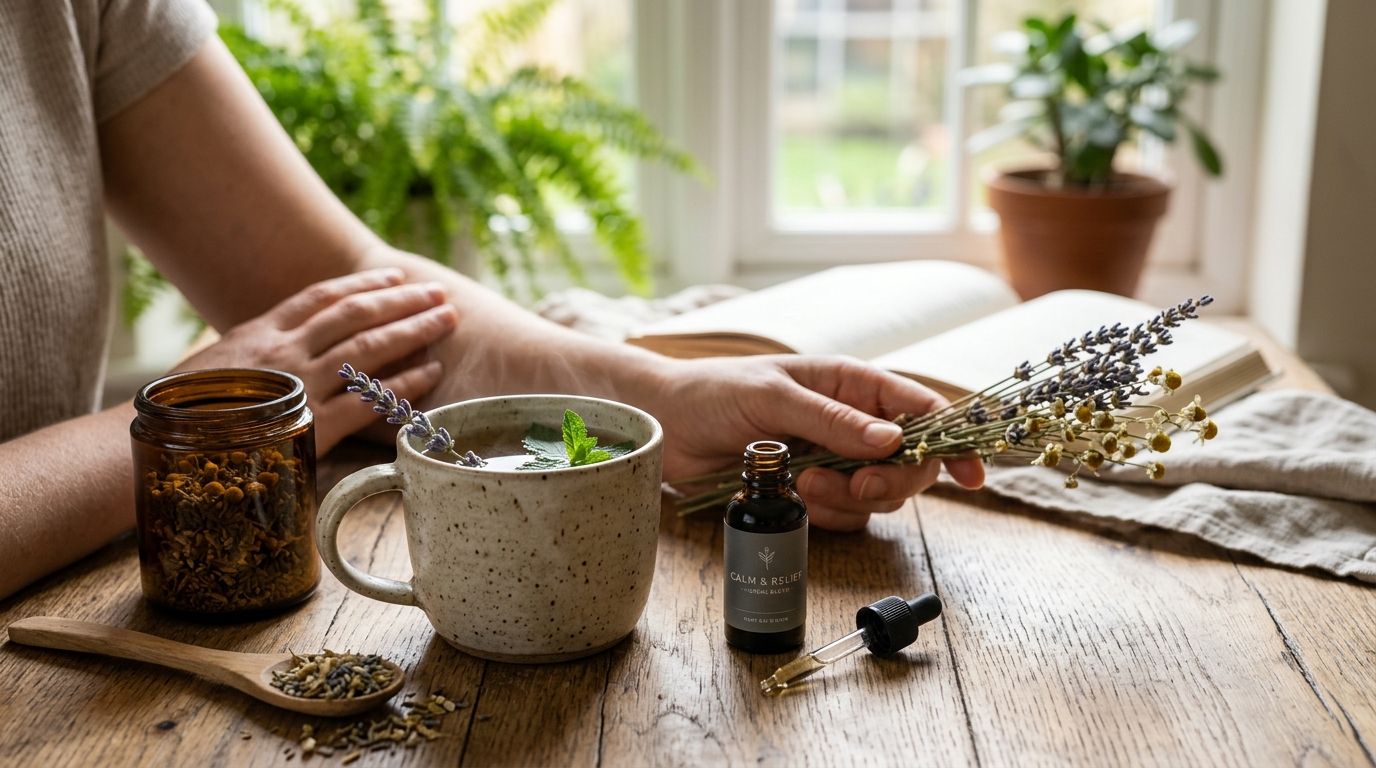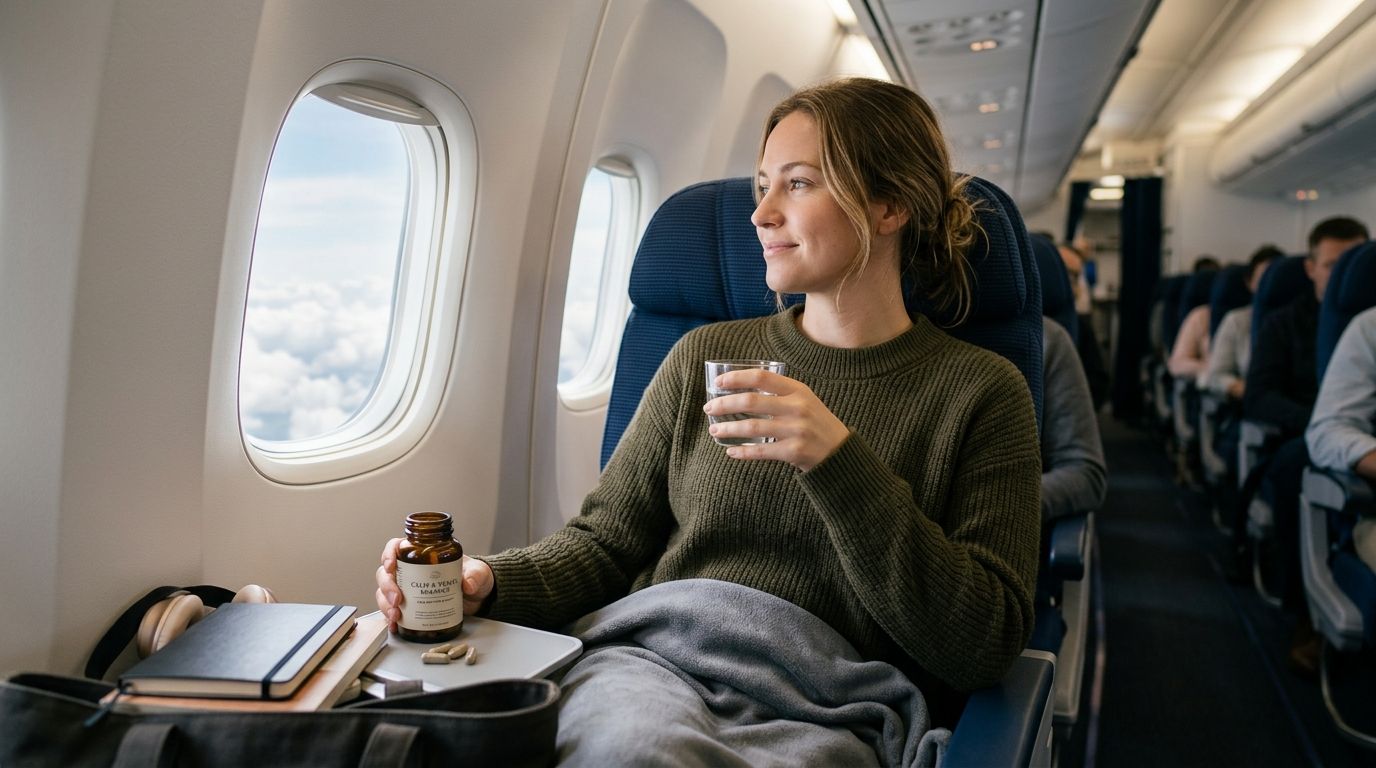
Relaxation support for travel and flight anxiety is a three-layer system: a calm-focus formula for the racing-mind hours in the air, a sleep formula for red-eyes and jet lag, and a routine that does the structural work no bottle can. What makes this segment different is that airplane anxiety is situational — it spikes for hours, then vanishes — so the support has to work fast, travel well, and not leave you foggy at the rental car counter.
Why flight anxiety resists willpower
Flying stacks every anxiety amplifier at once: you are sealed in a metal tube, 35,000 feet up, with no exit, no control, dry recycled air and a body that registers turbulence as danger. The fight-or-flight response fires exactly as designed, and no amount of telling yourself to relax shuts it off — the physiological state has to be addressed physiologically. Add the sleep disruption of red-eyes and time-zone changes, and travel becomes a two-front problem: acute anxiety in the air and broken rest on the ground.
That two-front structure is the whole plan: one formula for the calm layer, one for the sleep layer, and a boarding-to-landing routine that removes the triggers you actually control.
Step-by-step: the travel-day calm protocol
Two days out: remove the amplifiers
Anxiety compounds, so prep starts before the airport.
- Cut caffeine to one morning cup both days before flying — it mimics and amplifies anxiety symptoms
- Skip alcohol the night before; it fragments the sleep you will need
- Pack the night before, then stop packing — rushing at the door sets the nervous system's tone
- Choose your seat deliberately: over the wing for less turbulence motion, aisle for the exit-paths feeling
Airport and boarding: hold the line
- Get to the gate early; the sprint-to-the-gate cortisol spike poisons the first flight hour
- Eat something light and familiar before boarding — hunger reads as anxiety in the body
- Skip the pre-flight espresso and the airport bar; both make the in-air layer worse
In the air: the calm layer
This is where a fast-acting herbal calm formula earns its seat. Sol Nutrition's Calm Focus is an herbal blend designed to smooth stress so a racing mind stops steering — taken at boarding, it takes the edge off taxi, takeoff and turbulence without sedating you, so you can still work, watch a film or talk to your neighbor.
- Take it at boarding, before the engines change pitch
- Pair it with the physiological reset: 4-second inhale, 6-second exhale, two minutes, repeated at any spike
- Keep your feet grounded and your gaze forward during turbulence — visual stability calms the vestibular alarm
- Rehearse the dose once before travel day, never on it


Red-eyes and jet lag: the sleep layer
For overnight flights, sleep is both the goal and the antidote — an hour slept is an hour not spent white-knuckling. Sol Nutrition's Sleep Deeply is an herbal formula that supports the body's own melatonin production rather than dosing lab-made melatonin, designed for deep sleep without morning grogginess — which matters at 6 a.m. in a new time zone when you still have a train to catch. Take it once you're airborne with the lights dimmed, eye mask on.
On the ground, hold the arrival-day line: stay awake to a local bedtime, get morning daylight, and use Sleep Deeply for the first two or three nights while your clock resets.
Landing and the day after
- Hydrate harder than feels reasonable — cabin dehydration mimics hangover and anxiety symptoms alike
- Walk 20-30 minutes on arrival day; movement metabolizes the leftover stress hormones
- Keep the calm formula on hand for the return flight, not just the outbound
- Protect the first night's sleep; it sets the whole trip's rhythm
Comparing your options
| Option | Best for | Key limitation |
|---|---|---|
| Calm Focus | In-flight anxiety, takeoff and turbulence | Rehearse once before travel day |
| Sleep Deeply | Red-eyes and the first jet-lagged nights | Night tool, not a morning one |
| Breathing + seat strategy | Everyone, free, immediate | Works best alongside a formula |
| Alcohol | Nobody, really | Fragments sleep and amplifies the 3 a.m. wake-up |
| White-knuckling it | Short hops | Costs a day of the trip every time |
Common mistakes anxious flyers make
- Trying a new supplement at 30,000 feet. Rehearse everything at home once — novelty is itself an anxiety trigger.
- Using alcohol as the calm layer. It blunts the flight and then hands you a 3 a.m. heart-pounding wake-up at altitude.
- Caffeinating through the fear. Caffeine and anxiety share the same physical symptoms; doubling them helps nothing.
- Fighting turbulence instead of riding it. Loose grip, feet down, eyes on a fixed point — the body calms faster than the mind.
- Skipping the arrival-day movement. Leftover stress hormones need metabolizing, not marinating.
One last thing
If flight anxiety keeps you from trips you actually want to take, that is a conversation for a professional — exposure-based approaches have strong track records, and no supplement replaces them. The stack above is for the situational jitters most travelers know. For the longer-haul version of calm on the ground, the cortisol and stress guide covers the everyday stress layer in depth.
FAQ
What are the best relaxation supplements for flying?
A fast-acting calm formula like Calm Focus taken at boarding, plus a gentle sleep formula like Sleep Deeply for red-eyes and jet-lagged first nights. Rehearse both at home before travel day.
When should I take a calming supplement before a flight?
At boarding for Calm Focus — its herbal calm builds within the hour, covering taxi and takeoff. For overnight flights, take Sleep Deeply once airborne with the lights dimmed.
Will a calm supplement make me groggy at arrival?
Calm Focus is designed to smooth stress while keeping clarity, so it does not sedate. Sleep Deeply is built around natural melatonin support specifically to avoid next-morning fog — the design brief for 6 a.m. arrivals.
How do I calm anxiety during turbulence?
Feet flat, loose grip, eyes on a fixed point, and slow 4-in-6-out breathing. Turbulence is uncomfortable, not dangerous — the routine gives your body a script when the mind keeps shouting otherwise.
Does melatonin help with jet lag?
Supporting your body's own melatonin timing helps — which is the design logic behind Sleep Deeply. Pair it with morning daylight and a firm local bedtime on arrival for the fastest clock reset.
When is flight anxiety a medical problem?
When it stops you traveling, brings panic attacks, or needs alcohol to endure — those deserve a professional's help, and exposure-based programs work well. Situational jitters are normal and manageable.